Your Career Is Not a Three-Act Structure (Stop Treating It Like One)
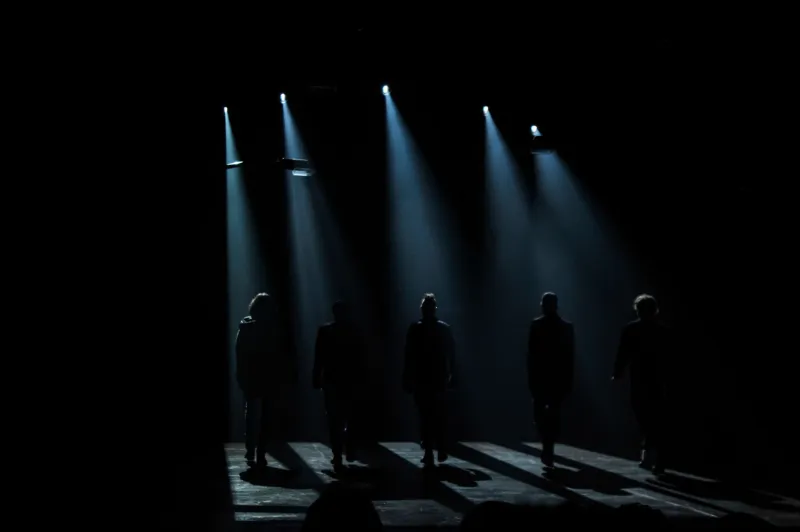
We spend so much time inside stories — learning them, living them, finding the emotional truth inside them — that it becomes almost impossible not to apply narrative logic to everything else in our lives. Including our careers.
I get it. I've done it. There's something deeply comforting about imagining your professional life as a story with a clear throughline. The scrappy beginning. The turning point. The triumphant third act where everything clicks and you're exactly where you were always meant to be. It's tidy. It makes sense of the chaos.
The problem? Careers aren't stories. And the moment you start treating yours like one, you risk making decisions based on what should happen next in the narrative rather than what's actually possible right now.
The Arc We Imagine vs. The Path We Actually Walk
A character arc works because it's designed. Someone — a writer, a room full of them — sat down and decided where the character begins, what breaks them open, and where they land. Every choice in between serves that destination.
Your career has no writer's room. Nobody is engineering your pivot moments or planting the seeds of your eventual breakthrough in episode two. You're operating in an industry that is, by almost every measure, beautifully and brutally unpredictable.
When actors internalize the arc framework too literally, a few things start to go sideways. They turn down opportunities that feel "too early" for where they think they are in their story. They hold out for roles that match the protagonist energy they've decided they should have by now. They read a lateral move — a commercial, a regional theater gig, a supporting part in something smaller — as a step backward rather than a door to something they haven't imagined yet.
The narrative voice in your head starts sounding less like a guide and more like a script supervisor who keeps flagging continuity errors.
Case Study: The Pivot Nobody Planned For
Think about some of the most interesting career trajectories in American entertainment. Bryan Cranston spent years as the goofy dad on Malcolm in the Middle before Breaking Bad rewrote everything anyone thought they knew about him. That wasn't a predetermined arc. That was an actor staying ready, saying yes to something unexpected, and trusting that the work would speak for itself.
Or look at Viola Davis — years of stage work, television appearances, supporting film roles — before How to Get Away with Murder and Fences put her name in a different conversation entirely. If she'd been waiting for the "right moment" as defined by some internal story structure, she might have passed on things that were quietly building her instrument and her industry relationships.
The pivot nobody planned for is often the most important one. But you can only take it if you're not locked into the idea that it doesn't fit your narrative.
Where Character Arcs Are Actually Useful
I don't want to throw the whole framework out. Understanding character arcs makes you a better actor, full stop. Knowing how transformation works on a structural level — the wound, the want, the need, the moment of truth — helps you find specificity inside a role that might otherwise feel flat.
The distinction I'm drawing is between applying arc thinking to a character you're playing versus applying it to yourself as a professional.
When you're in the work, arc thinking sharpens your choices. When you're making career decisions, it can dull them. It replaces genuine responsiveness with a kind of narrative stubbornness — the feeling that you have to honor the story you've already started telling about yourself.
Flexibility Is the Real Skill
Here's what I've noticed in actors who have the kind of longevity that actually means something: they stay curious about what's possible rather than committed to what's planned. They don't have a five-year story arc. They have values, skills, and relationships — and they stay alert to wherever those three things might intersect with opportunity.
That requires a different kind of mental flexibility than most acting training explicitly develops. We train for emotional availability, for physical presence, for textual analysis. But the career skill of staying genuinely open — not just saying you're open while secretly waiting for the thing that fits your self-narrative — that takes real practice.
One concrete way I've tried to build that muscle: whenever I catch myself thinking "that doesn't make sense for where I'm at," I try to interrogate who wrote that rule. Usually, it wasn't anyone. It was me, running a story that nobody else is actually tracking.
The Ending You Can't Write Yet
Here's the thing about three-act structures — they only make sense in retrospect. When you're watching a film, you don't know you're in the first act. The story feels open, uncertain, full of possibility. It's only once the credits roll that the shape becomes clear.
Your career is always in the middle of being written. The meaning gets assigned later, and usually not by you — by the body of work itself.
So maybe the move is to stop trying to write the ending in advance. Stay in the scene you're actually in. Do the work that's in front of you with everything you've got. And trust that the arc, whatever it turns out to be, will make sense when someone looks back at it.
Just probably not the way you planned it. And that might be exactly right.