The Weird Jobs That Made Me a Better Actor Than Any Class I Ever Took
I have nothing against acting class. I've taken plenty of them. Some were genuinely transformative. A few were expensive and confusing. Most landed somewhere in between — useful, but in that vague way where you're not entirely sure what you absorbed until years later when something clicks on set.
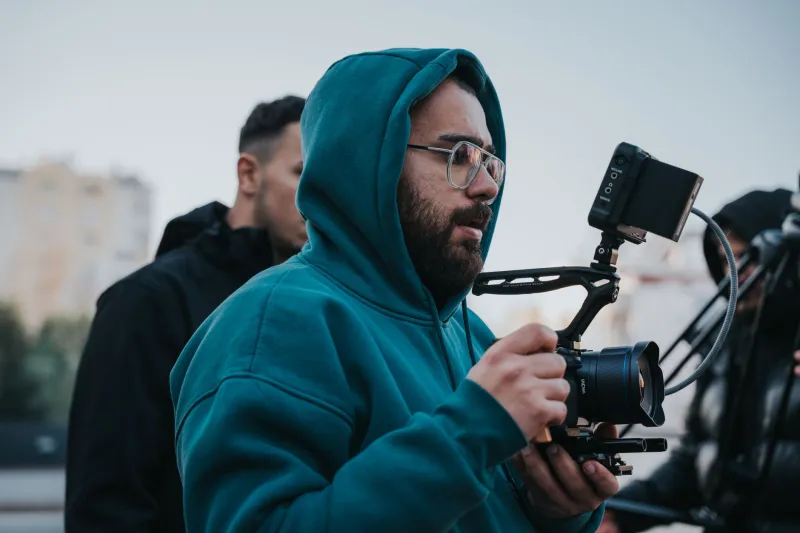
But if I'm being straight with you, the single biggest leap I ever made as a performer didn't happen in a studio with a coach calling sides. It happened when I started doing everything else — writing, editing, directing, producing — and accidentally rebuilt my understanding of performance from the outside in.
This isn't a knock on formal training. It's more of an honest accounting of where the real education came from.
The First Time I Sat in an Edit Bay
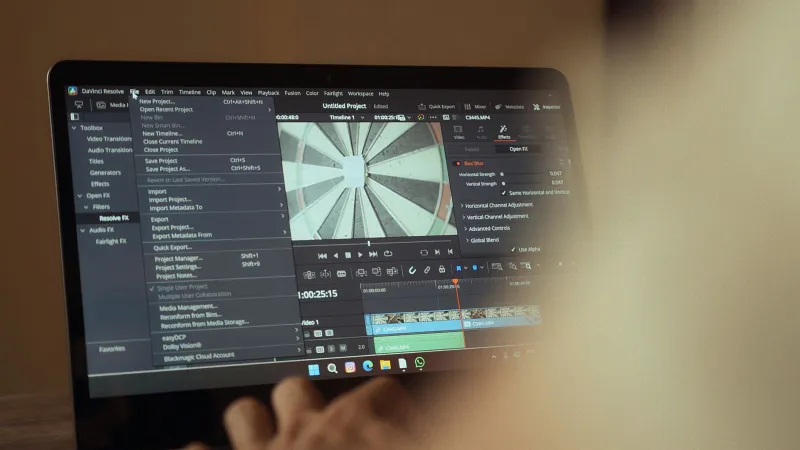
I started cutting my own short-form content a few years back — nothing fancy, just stuff I was creating to stay sharp and have something to put out into the world. And somewhere in hour three of staring at footage of myself, something uncomfortable happened: I started to see exactly what I was doing wrong.
Not in a self-critical spiral kind of way. In a technical way. I could see the exact moment I telegraphed a reaction before the other actor finished their line. I could see the micro-expression that contradicted what I was saying. I could see the moments where I was acting instead of just being.
No coach had ever been able to show me that as clearly as watching my own footage on a timeline. The edit doesn't lie. It doesn't soften the note or frame it constructively — it just shows you what's there.
From that point on, I started thinking about performance the way an editor thinks about footage. Is this moment earning its time? Is this reaction truthful or is it decorative? What's the cut point — meaning, where does this beat actually land?
That shift in perspective quietly changed everything.
Writing Dialogue Made Me Stop Hating Mine
I also started writing — scripts, scenes, character sketches. Mostly for my own projects, occasionally for other people. And writing dialogue is humbling in a very specific way: you realize immediately how hard it is to make words sound like something a human being would actually say.
When you've spent hours trying to write a line that lands naturally, you develop a completely different relationship with the lines you're given as an actor. Instead of fighting the dialogue or trying to make it "better" with your performance, you start to understand the choices the writer made — even the clunky ones. You start to look for what the line is trying to do rather than what it sounds like on the surface.
That's a massive shift. So many performance problems come from actors not trusting the material. Once you've written your own material and discovered how intentional every word can be, you start extending that trust to other people's work. And that makes you a better collaborator and a more grounded performer.
Directing Friends Through Scenes Taught Me What I Look Like from the Outside
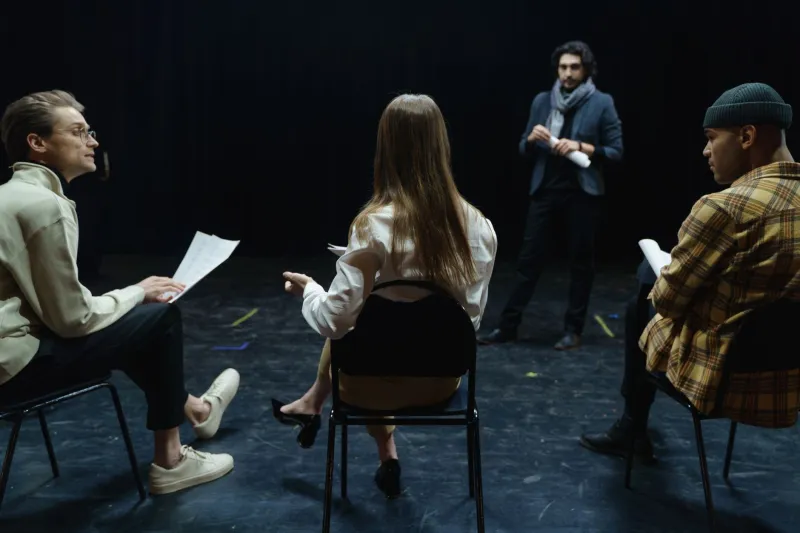
At some point I started directing small scenes — workshop stuff, nothing formal — mostly because I wanted to understand the director's perspective better. And here's what nobody tells you about directing: it's basically a masterclass in human behavior.
You're watching people try to do something emotionally real under artificial conditions, and your job is to figure out why it's not working and then communicate the fix in a way that doesn't make them self-conscious. That requires you to understand performance from a structural level — what's the obstacle, what's the want, where's the resistance, where's the release.
Once I started thinking about scenes that way as a director, I couldn't un-think it as an actor. Every scene I walked into after that, I was simultaneously playing the role and observing it — not in a dissociative way, but in a way that kept me honest. I knew what the director was looking for because I'd been the director looking for it.
The Behind-the-Scenes Hours Nobody Talks About
There's a certain mythology in actor culture that the performance is everything — that the real magic is in the room when the camera rolls, and everything else is just logistics. I bought into that for a long time.
But the more time I spent on the production side of things, the more I realized that performance is the last ten percent of a very long process. The real storytelling happens in the writing, the casting choices, the location scouting, the costume decisions, the editing rhythm. By the time an actor steps in front of a camera, hundreds of decisions have already been made that shape what that performance can be.
Understanding that context made me a more collaborative, more curious, and honestly more humble performer. I stopped showing up to set with a fully formed interpretation that I was going to defend at all costs. I started showing up with questions — about what came before this scene, about what the editor might need, about what the director is building toward.
That curiosity made me easier to work with. And being easy to work with, I'll tell you, is not a small thing in this industry.
What I'd Tell Actors Who Only Act
If you're exclusively focused on technique — scene study, cold reading, on-camera workshops — you're doing important work. Don't stop. But consider carving out some time to sit on the other side of the process.
Edit something. Write a scene. Direct a friend through a monologue. Volunteer on a student film in a producing capacity. Not because it'll look good on your resume, but because it will fundamentally change how you see your own craft.
Acting in a vacuum is like being a musician who's never listened to a full album. You understand your instrument, but you don't understand the song.
The song is the whole point.