Why Your Least Compatible Collaborator Might Be Your Greatest Creative Asset
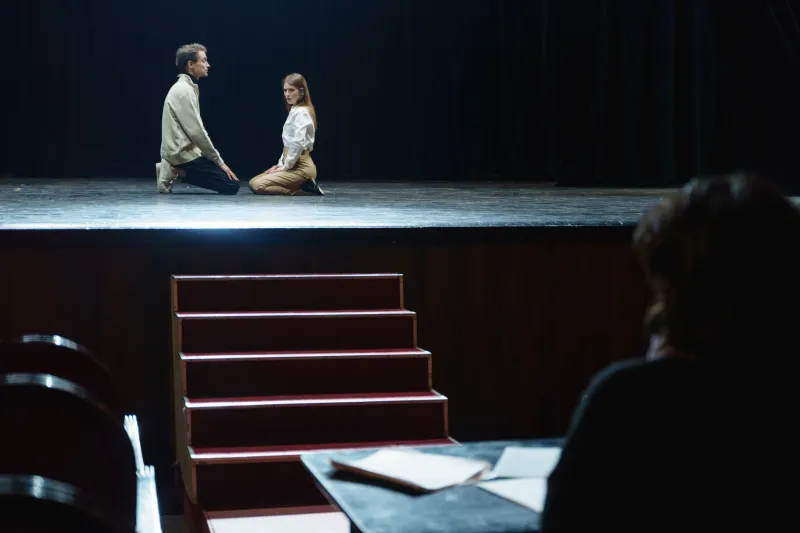
There's this actor I worked with a few years back. Different taste in music, different politics, different sense of humor — the kind of person I'd probably never grab dinner with after a long shoot day. We didn't have a lot to talk about between takes. And yet, every single time we stepped into a scene together, something happened that I genuinely couldn't manufacture with people I actually liked.
I've been thinking about that a lot lately. About why it worked. About what it means for the way I choose collaborators — and the way most of us in this business make that choice almost entirely on instinct and personal comfort.
Here's the honest truth: we are wired to work with people we like. It feels safer. It feels easier. And in a profession that already comes loaded with vulnerability and exposure, the idea of leaning into discomfort by choice sounds borderline masochistic. But I've come to believe that the instinct to surround yourself only with people you personally vibe with is one of the quieter ways actors — and creators — limit themselves.
Personal Compatibility Is Not Creative Synergy
These two things get conflated constantly, and it's worth pulling them apart.
Personal compatibility is about shared interests, similar communication styles, overlapping worldviews. It's what makes someone easy to be around. Creative synergy is something else entirely. It's about friction, contrast, and the kind of productive tension that emerges when two different artistic impulses collide in the same space. Those two things occasionally overlap. But they don't have to — and assuming they do is a mistake.
Some of the most celebrated on-screen pairings in American cinema came from people who famously didn't get along off-camera. The tension wasn't incidental to the work — it was the work. The audience could feel something real between those performers because something real was actually happening. Not warmth, necessarily. Not friendship. But genuine human electricity.
When you work with someone you're completely comfortable with, there's a risk that comfort becomes a ceiling. You know their rhythms. They know yours. The scene becomes a familiar dance rather than a live encounter. Audiences can smell the rehearsed ease. What they respond to — what makes them lean forward — is unpredictability. The sense that neither performer is entirely sure what's coming next.
What Professional Respect Actually Unlocks
Here's what I've noticed in situations where the personal connection wasn't there but the creative collaboration still worked: mutual professional respect became the foundation instead of friendship, and that foundation turned out to be surprisingly solid.
When you can't default to "we're buddies, it'll be fine," you're forced to show up more deliberately. You're more present. You listen harder because you're not filling in gaps with assumed familiarity. You're actually watching the other person — reading them in real time — because you don't have a shorthand to fall back on.
That heightened attention? That's acting. That's the thing acting teachers spend years trying to get students to do naturally. And sometimes the fastest route to it is working with someone who doesn't let you get lazy.
Professional boundaries, when they're held with mutual respect, can actually create a kind of artistic safety that personal closeness sometimes erodes. There's no emotional baggage bleeding into the scene. No history distorting the moment. Just two people doing the work, cleanly, without the noise that friendship sometimes brings along for the ride.
Fighting Your Own Instincts
This is the hard part. Because the instinct to gravitate toward comfort isn't just laziness — it's human. And in a business where you're constantly being evaluated and exposed, seeking out people who make you feel at ease makes complete sense.
But I think there's a version of growth available to us that requires deliberately choosing against that instinct sometimes. Not recklessly — not working with people who are unprofessional, unkind, or toxic. That's a different conversation. I'm talking about the collaborator who is simply different from you. Whose process doesn't match yours. Whose energy reads as friction rather than flow.
The question worth sitting with is: is this friction destructive, or is it generative? Those are not the same thing. Destructive friction tears down. Generative friction builds something neither person could have built alone.
When I look back at the work I'm most proud of, it rarely came from the easiest collaborations. It came from the ones that asked more of me — the ones where I couldn't coast, couldn't assume, couldn't rely on personal warmth to smooth over the gaps in my own preparation.
A Practical Reframe
If you're building a project, casting a short film, pulling together a creative team — try this: instead of asking "do I like this person?" ask "does this person bring something I don't already have?"
That second question is harder to answer because it requires you to know yourself well enough to identify your own gaps. But it's the more useful question. It shifts the frame from comfort to craft.
You can absolutely build something with your friends. Some of the most enduring creative partnerships in entertainment are between people who genuinely love each other. I'm not saying friendship poisons the work. I'm saying it's not a prerequisite — and treating it like one cuts you off from a whole category of collaboration that might be exactly what your work needs.
The Takeaway
That actor I mentioned at the start — we never became close. Still haven't. But I carry that collaboration with me as one of the clearest examples I have of what happens when two people simply commit to the work without needing anything else from each other.
Sometimes the best thing you can bring into a creative space is the willingness to be surprised by someone you wouldn't have chosen. To let the discomfort be productive. To trust that the work doesn't need you to be friends — it just needs you to be present.
That's a harder ask than it sounds. But the results? Worth every uncomfortable beat.