What Hundreds of Auditions Finally Taught Me About Shutting Up and Hearing
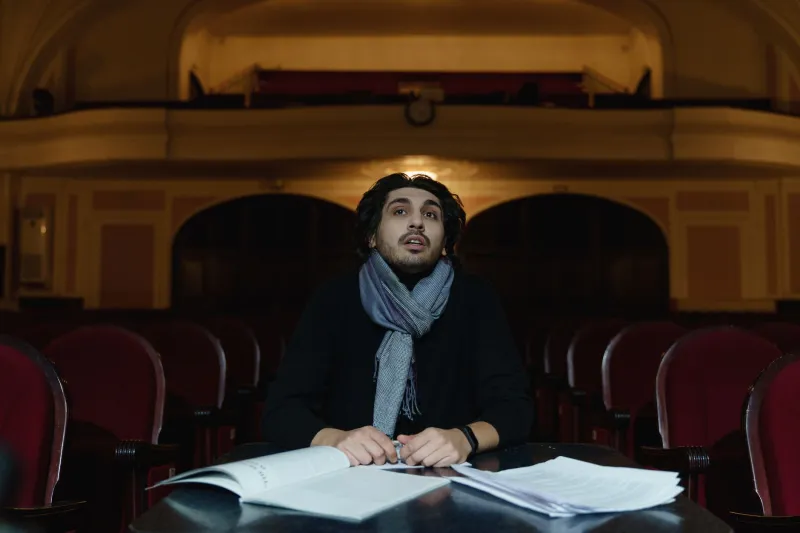
For a long time, I thought the audition room was a stage. My stage. I'd walk in with a fully loaded performance — every beat mapped out, every pause timed, every emotional shift rehearsed until it felt like breathing. And more often than not, I'd walk back out feeling like I'd nailed it.
Then I'd wait. And nothing would come.
It took an embarrassingly long stretch of those quiet phone screens before I started asking the right question. Not what am I doing wrong in there? but what am I not hearing?
That reframe changed everything.
The Performance Trap
Here's the thing about being well-prepared: it can actually work against you. When you've drilled a scene into muscle memory, you stop responding to what's in the room and start executing what's in your head. You're no longer in a conversation — you're delivering a monologue at someone.
Casting directors notice this immediately. They may not always say it out loud, but you can feel the temperature drop when a performance is airtight but airless. There's no entry point for them. No sense that anything could shift or surprise anyone, including you.
I remember one particular audition for a supporting role in a cable drama — not going to name names, but it was a project I genuinely wanted. I came in locked and loaded. The reader gave me something completely unexpected in the second exchange, a kind of wary hesitation that wasn't in the sides at all. And I bulldozed right past it. Didn't even register it until I was back in my car replaying the tape in my head.
I'd been so busy performing that I forgot to actually be there.
What Listening Actually Looks Like in the Room
Active listening in an audition isn't passive. It's not sitting back and waiting for your cue. It's a full-body, full-attention practice that starts before you even open your mouth.
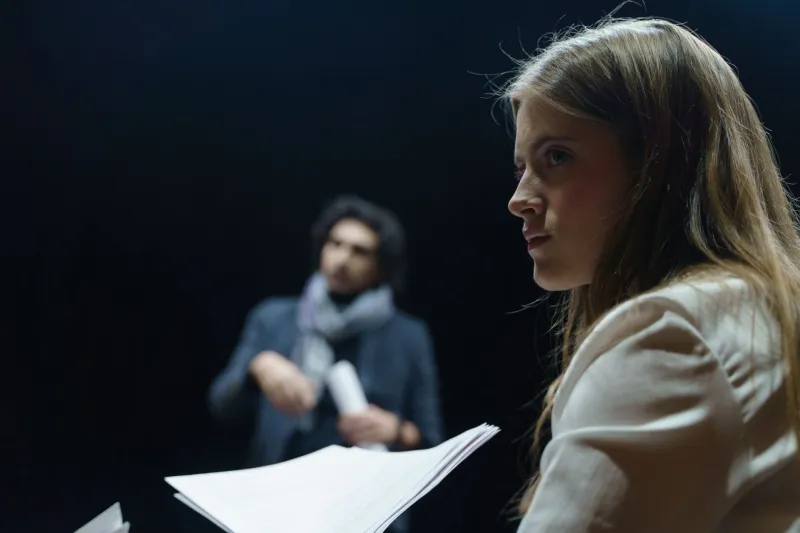
It starts when the casting director introduces themselves. Are they rushed? Warm? Distracted? That tells you something about the energy of the room and what kind of read they might be in the mood for. It continues when they give you any kind of direction before you begin — and this is where a lot of actors check out, already cycling through their opening beats.
I learned to treat pre-read direction like gold. Not just the literal notes, but the tone behind them. When a CD says "can you bring it down a little?" they might mean volume, or they might mean emotional temperature, or they might be signaling that the character is more internal than you've played them. Hearing only the surface of that note and not the intention underneath it is a missed opportunity every single time.
One of my cleaner audition wins came from exactly this kind of listening. The direction I got was something like, "He's not angry, he's tired." Simple note. But I sat with it for a second instead of just nodding and going again. Tired of what? Tired of fighting? Tired of pretending? I made a choice based on what I heard underneath the words — that this guy had been carrying something heavy for a long time — and the callback came the next morning.
It Spills Off the Set, Too
Here's what surprised me most: the listening skills I built in audition rooms didn't stay in audition rooms.
On set, the difference between an actor who listens and one who performs at their scene partner is visible in the dailies. Directors can feel it in the room. Your castmates definitely feel it. When you're genuinely reactive — when what your partner does in a take actually lands and changes something in you — that aliveness shows up on screen in ways no amount of technical polish can fake.
I've had scene partners who were technically proficient but fundamentally absent. Their eyes were doing the right things, but nothing was coming through. And I've worked with actors who maybe weren't the most technically polished but were so present that every take felt like something could actually happen. Those are the people who make you better. Those are also, not coincidentally, the people who tend to have long careers.
Off set, same principle. The industry relationships that have actually moved the needle for me — the collaborators who became long-term creative partners, the directors who kept calling me back — those connections were built on genuine listening. Not networking-event listening, where you're half-processing what someone says while scanning the room. Real listening. The kind where you remember what someone told you six months ago and ask about it.
People in this business, like people everywhere, can tell the difference.
The Subtext Is the Text
One of the things acting training hammers into you is the idea of subtext — what's being said underneath what's being said. But I think we sometimes apply that only to the characters we're playing and forget to apply it to the actual humans we're talking to.
When a director gives you a note that sounds like a compliment but has a "however" buried in it, that's subtext. When a casting associate says "we're still figuring out the tone of the piece" mid-session, that's information. When a producer on set goes quiet after a take instead of giving you a thumbs-up, that silence is a note.
Learning to hear what's not being said directly — to pick up the frequency underneath the frequency — is a skill that develops slowly. It's also one that nobody really teaches you formally. You build it through reps. Through walking into rooms, paying attention, getting it wrong, adjusting, and going again.
Hundreds of auditions. That's what it took for me to stop treating the room like an audience and start treating it like a conversation.
The Shift That Actually Stuck
If I had to boil it down to one practical thing: I stopped rehearsing at the material and started rehearsing with it. I'd run lines with a friend or a reader and actually let their choices affect me — not just wait for my next cue. I'd practice sitting with a note for a full breath before responding, instead of immediately launching into a new take.
Slowing down to hear more turned out to be the fastest thing I ever did for my career.
The audition room isn't a stage. It's a room full of people trying to solve a problem. And the actor who walks in genuinely ready to listen — not just to perform — is the one who actually helps them solve it.