What the Stage Taught Me That No Film Set Ever Could
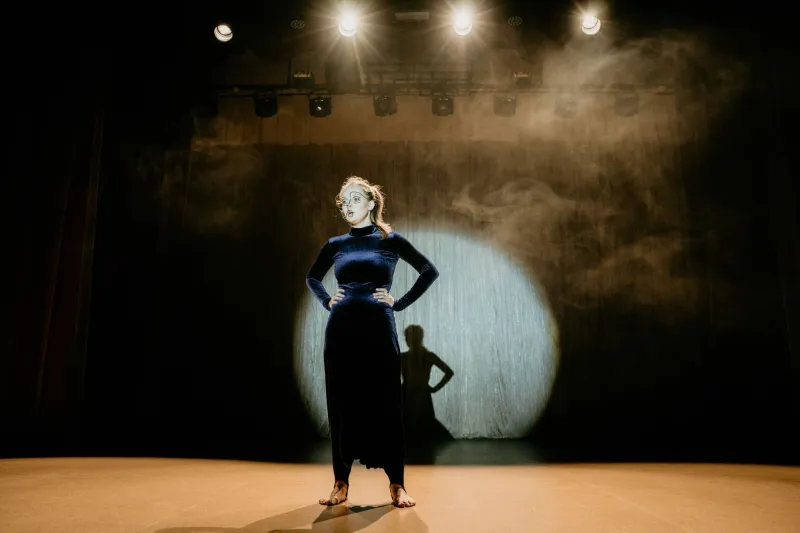
The Curtain Rises Before the Camera Does
There's a moment right before a stage performance begins — the house lights dim, the audience settles, and you're standing in the wings with nowhere to hide. No second takes. No editor to bail you out. Just you, the words, and a room full of people who drove here specifically to watch you figure it out in real time.
That feeling never really left me, even after I made the transition to film and television work. If anything, it became the quiet engine running underneath everything I do on screen. Theater didn't just train my voice or teach me to project — it fundamentally rewired how I think about character, presence, and truth in performance.
I know a lot of actors debate whether to start on stage or jump straight into on-camera work. My honest answer? Do both if you can. But if theater shaped you first, don't ever apologize for it. Lean in hard.
Living Inside a Character, Not Just Visiting
One of the biggest adjustments actors face when moving from theater to film is scale. On stage, you're playing to the back row. On camera, a microexpression can do the work of a monologue. But what theater gave me was something more essential than projection — it gave me the ability to live inside a character continuously.
In theater, you don't get to reset between moments. A two-hour play runs straight through, and your character's emotional logic has to be airtight from scene one to the final bow. That kind of sustained internal consistency is something I bring to every film role I take on, even when the scenes are shot wildly out of sequence.
When I'm on a film set and we're shooting the emotional climax of a story before we've even filmed the setup, I can anchor myself because I've already built the character's full arc in my head — the way I would for a stage run. That mental throughline keeps the performance honest no matter what order the camera captures it.
The Gift of an Unforgiving Audience
Here's something nobody really tells you about stage work: the audience teaches you things no acting coach can. When a joke lands and the room erupts, you feel it physically. When a dramatic beat hits wrong and the energy in the house shifts, you feel that too. Live performance is the world's most honest feedback loop.
I remember doing a production early in my career where I was playing a character going through genuine grief. I thought I had it nailed in rehearsal. Opening night, something felt off — I was performing grief instead of experiencing it. The audience didn't heckle me or walk out, but I could feel the emotional distance in the room. It was like a wall of glass between us.
That experience cracked something open in me. I went back and rebuilt the scene from the inside out, finding the specific, personal memory that made the loss real for me — not just real for the character. When I brought that version to the stage the following night, the silence in the theater afterward was the kind that feels full rather than empty. That lesson about specificity and genuine emotional access? It travels everywhere with me, including onto any film set I walk onto.
Technique Is a Tool, Not a Destination
Theater training gave me a serious toolkit — breath control, physical awareness, text analysis, the ability to cold-read a scene and find its emotional architecture quickly. These aren't just stage skills. They're acting skills, full stop.
On a film set, there's often very little time for deep character discussion. Directors are moving fast, schedules are tight, and you're expected to show up ready. Because I spent years breaking down scripts for the stage — understanding subtext, tracking a character's want versus their need, identifying the turning points in every scene — I can do that prep work efficiently and independently.
But I want to be clear about something: technique is meant to disappear. The goal of all that training is to internalize it so completely that it stops being a checklist and starts being instinct. The best film performances feel effortless precisely because the work happened long before the camera rolled.
Advice for Actors Standing at the Fork in the Road
If you're an aspiring actor trying to decide between pursuing stage work or jumping straight into film and TV, here's my genuine take:
Don't treat them as opposites. The actors I admire most — the ones whose screen work consistently feels lived-in and real — often have serious stage experience somewhere in their background. It's not a coincidence.
Stage work builds endurance, specificity, and the ability to hold a character's truth under pressure. Those qualities don't diminish on camera — they deepen your work in ways that are hard to fake.
That said, on-camera technique is its own discipline and absolutely worth studying directly. The stillness required for close-up work, understanding how the lens sees differently than the human eye, learning to hit a mark without looking mechanical — these are real skills that take dedicated practice.
My advice? Do a play. Do student films. Do both at the same time if you can swing it. Let each discipline inform the other. The stage will make you braver. The camera will make you more specific. Together, they'll make you a more complete actor.
The Stage Never Really Leaves You
Even now, when I'm deep in prep for a screen role, I'll often do something that might seem odd to people who haven't come from a theatrical background — I'll run the entire arc of the character's journey in my head as if it were a stage performance. Beginning to end. No cuts, no coverage, no safety net.
It's my way of stress-testing the character. If the logic holds up through that imaginary performance, it'll hold up on set regardless of how the shooting schedule gets scrambled.
The stage taught me that storytelling is a contract with the audience — a promise that you'll show up fully, stay present, and tell the truth. I've never found a reason to break that contract just because the medium changed.